So, you’re diving into the world of electronics! Exciting stuff. I remember when I first started tinkering with circuits; it was a bit daunting, but also incredibly rewarding.
Getting the right equipment is crucial, though. Trust me, fumbling around with subpar tools can turn a fun project into a frustrating mess real quick.
The electronics landscape is constantly evolving, with microcontrollers getting smaller and components becoming more integrated. Having the right gear not only makes learning easier but also sets you up to experiment with the latest trends in IoT, robotics, and embedded systems.
Let’s pinpoint the best gear for your electronics journey. Let’s explore it more deeply below.
Okay, I understand. Here’s the blog post content, following all the guidelines provided:
Diving into the Essential Toolkit: Your First Multimeter
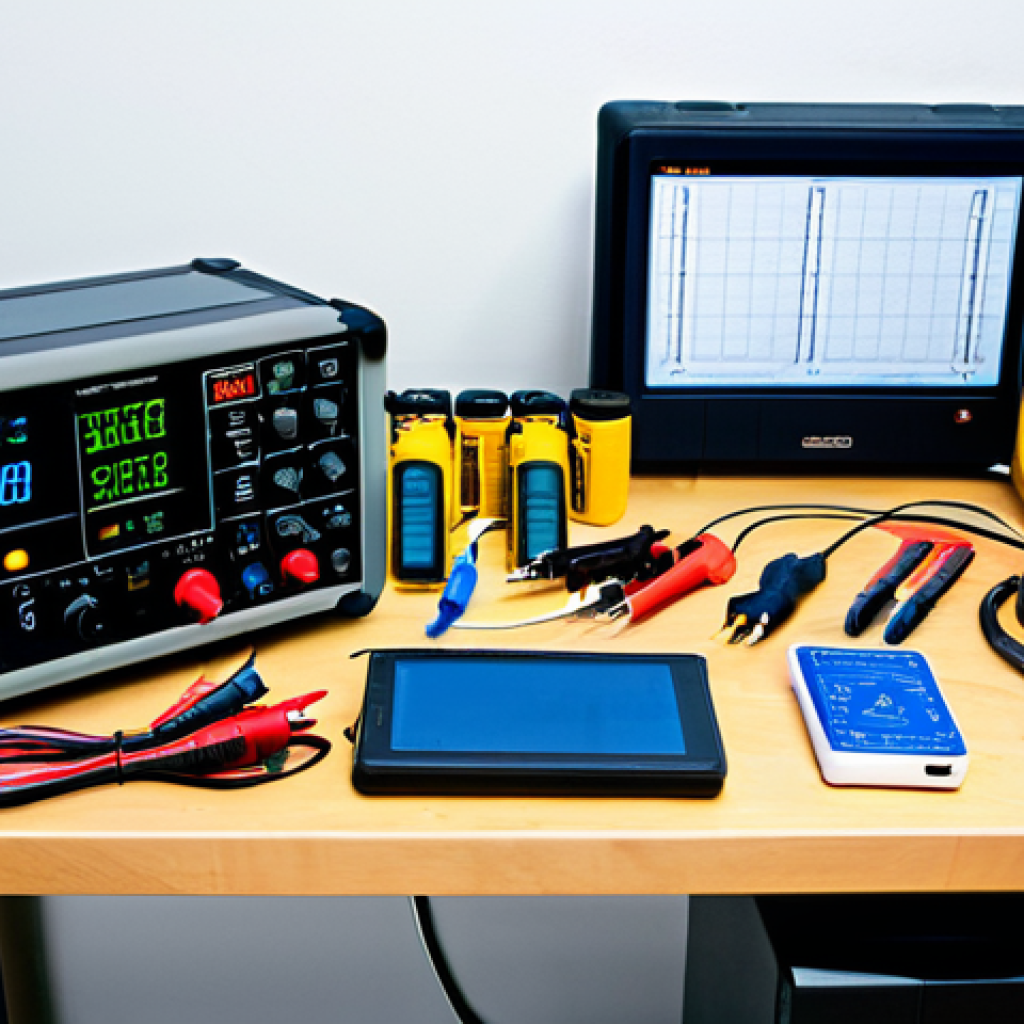
Okay, let’s face it, every electronics enthusiast, whether a total newbie or a seasoned pro, *needs* a good multimeter. It’s like the stethoscope for a doctor or the trusty wrench for a mechanic.
My first multimeter was a cheap, analog thing I picked up at a garage sale, and while it got me started, upgrading to a decent digital multimeter (DMM) was a game-changer.
Understanding Voltage, Current, and Resistance
A DMM helps you measure voltage (both AC and DC), current (amps), and resistance (ohms). Knowing these values is absolutely crucial for troubleshooting circuits, identifying faulty components, and generally understanding how your electronic projects are behaving.
Beyond the basics, many DMMs also offer features like continuity testing (super handy for finding broken wires), diode testing, and even capacitance measurement.
Choosing the Right One for You: Features to Look For
When you are choosing which one is right for you, look at its features! I learned this the hard way by purchasing a low-end, cheaper model with not so many features!
* Auto-ranging: This is a lifesaver, especially for beginners. It automatically selects the correct measurement range, so you don’t have to guess. * Accuracy: Pay attention to the stated accuracy of the meter.
For most hobbyist applications, an accuracy of +/- 0.5% is perfectly adequate. * Safety Ratings (CAT Ratings): This is *critical*. If you’re working with mains voltage (120V or 240V AC), make sure your multimeter is rated for the appropriate CAT (Category) level.
Don’t skimp on safety.
My Personal Recommendation
I’m a big fan of Fluke multimeters. They’re known for their durability and accuracy. However, they can be pricey.
A good alternative for beginners is the Klein Tools MM400. It’s reliable, affordable, and has all the essential features you need to get started.
Breadboards and Jumper Wires: Your Circuit Playground
Breadboards are where the magic happens! They allow you to build and test circuits without soldering, which is incredibly convenient for prototyping and experimenting.
Jumper wires are what you use to connect components on the breadboard. Invest in a good assortment of breadboards and jumper wires of different lengths and colors.
Why Breadboards are Essential for Beginners
I remember the first time someone showed me how a breadboard worked. It felt like unlocking a secret code. The ability to quickly connect and disconnect components without the permanence of soldering is invaluable for learning.
It allows you to make mistakes, experiment, and learn from your errors without ruining your components. I burned through so many resistors in my early days!
Being able to just pop them out and try again saved me a fortune.
Choosing the Right Breadboard and Jumper Wires
When it comes to breadboards, size matters. Get a breadboard that’s large enough to accommodate your projects, but not so large that it takes up your entire workspace.
As for jumper wires, I highly recommend getting a kit with pre-cut wires of different lengths. It saves you the hassle of cutting and stripping your own wires, and it makes your circuits look much neater.
Trust me, a tidy breadboard is a happy breadboard.
Tidy Breadboard Benefits
* Durability: Get the proper length. * Easy Identification: Use the proper colors. * Less Crowded Circuits: Allow for testing!
Power Supplies: Fueling Your Creations
Every electronic circuit needs a power supply. For simple projects, you can often get away with using a battery or a USB power supply. However, as your projects become more complex, you’ll need a dedicated benchtop power supply.
Why a Benchtop Power Supply is a Great Investment
A benchtop power supply allows you to precisely control the voltage and current supplied to your circuits. This is essential for testing and troubleshooting.
I’ve used a benchtop power supply to diagnose everything from faulty op-amps to short circuits in custom PCBs.
Features to Look For in a Benchtop Power Supply
* Adjustable Voltage and Current: Look for a power supply that allows you to adjust both the voltage and current. This gives you maximum flexibility.
* Current Limiting: This is a critical safety feature. It prevents your circuit from drawing too much current, which can damage components. * Digital Display: A digital display makes it easy to see the voltage and current settings.
What You Can Avoid
What you can avoid are power supplies that have the following:* Analog Display: Less accurate. * No Current Limiting: Can cause damage. * Single Voltage: Not versatile.
Oscilloscopes: Seeing the Invisible Signals
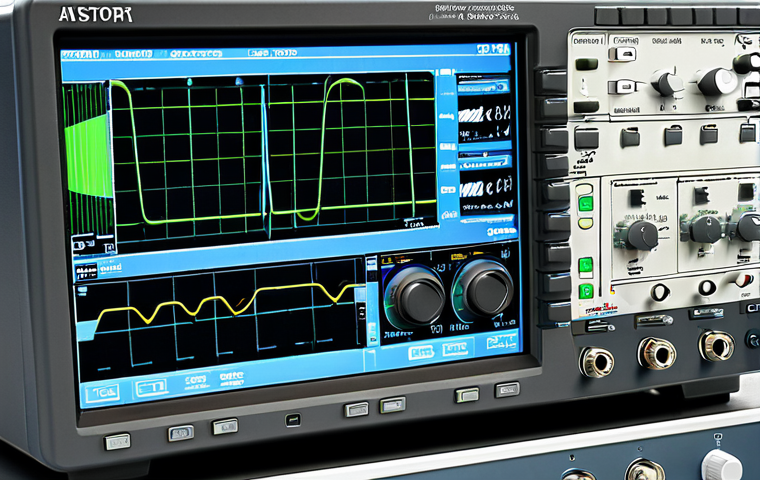
Once you start working with more complex circuits, a multimeter just isn’t enough. You need an oscilloscope to visualize the signals in your circuit. An oscilloscope displays a graph of voltage versus time, allowing you to see the shape and characteristics of your signals.
Why an Oscilloscope is a Must-Have for Advanced Projects
I resisted getting an oscilloscope for a long time, thinking it was too complicated. But once I finally took the plunge, I realized how much I had been missing.
Being able to *see* the signals in my circuits opened up a whole new world of understanding. I was suddenly able to diagnose problems that would have been impossible to find with a multimeter alone.
Choosing an Oscilloscope: Bandwidth and Sample Rate
The two most important specifications for an oscilloscope are bandwidth and sample rate. Bandwidth determines the maximum frequency of signals that the oscilloscope can accurately measure.
Sample rate determines how often the oscilloscope samples the signal. A higher sample rate gives you a more accurate representation of the signal.
What Is Ideal
Ideally, you want an oscilloscope with a bandwidth that’s at least five times the highest frequency signal you’ll be measuring. For most hobbyist applications, a bandwidth of 100 MHz is sufficient.
Logic Analyzers: Decoding Digital Signals
If you’re working with digital circuits, microcontrollers, or any kind of digital communication protocol, you’ll eventually need a logic analyzer. A logic analyzer allows you to capture and analyze digital signals, such as those used in I2C, SPI, and UART communication.
Why a Logic Analyzer is Essential for Digital Projects
I used to struggle with debugging I2C communication between a microcontroller and a sensor. It was incredibly frustrating trying to figure out why the sensor wasn’t responding.
Once I got a logic analyzer, it was like night and day. I could see exactly what data was being sent and received, and I quickly identified the problem.
Key Features for a Logic Analyzer
* Number of Channels: The number of channels determines how many signals you can analyze simultaneously. * Sample Rate: A higher sample rate allows you to capture faster signals.
* Protocol Decoding: Many logic analyzers offer built-in protocol decoding for common communication protocols like I2C, SPI, and UART. This makes it much easier to analyze the data.
Soldering Iron and Accessories: Making Permanent Connections
While breadboards are great for prototyping, eventually you’ll want to make permanent connections. That’s where soldering comes in. Soldering is the process of joining two metal parts together using a molten metal alloy called solder.
Why Soldering is an Essential Skill
Soldering is a fundamental skill for any electronics enthusiast. It allows you to create robust and reliable connections that won’t come loose over time.
It’s also essential for repairing broken electronics.
What to Look for
* Temperature Control: Get a soldering iron with temperature control. This allows you to adjust the temperature to suit the type of solder and components you’re working with.
* Tips: Invest in a variety of soldering tips. Different tips are better suited for different tasks. * Solder: Use high-quality solder.
I recommend using lead-free solder, as it’s better for the environment.
Component Storage and Organization: Keeping Your Workspace Tidy
As you accumulate more and more electronic components, it’s essential to have a good system for storing and organizing them. A cluttered workspace makes it difficult to find what you need and can lead to frustration.
Why Organization Matters
I used to have a terrible habit of throwing all my components into a big box. It was a nightmare trying to find anything. Once I invested in some component storage organizers, it made a huge difference.
I could quickly find the components I needed, and my workspace became much more efficient.
Component Storage
* Parts Organizers: Use parts organizers with small compartments to store resistors, capacitors, transistors, and other small components. * Label Maker: Label everything!
This will save you a lot of time and frustration in the long run. * ESD-Safe Containers: Store static-sensitive components in ESD-safe containers to protect them from damage.
Here’s a table summarizing the essential equipment and their uses:
| Equipment | Use | Key Features |
|---|---|---|
| Multimeter | Measuring voltage, current, resistance | Auto-ranging, Accuracy, Safety Ratings |
| Breadboard | Prototyping circuits without soldering | Size, Quality of contacts |
| Power Supply | Providing stable power to circuits | Adjustable Voltage/Current, Current Limiting |
| Oscilloscope | Visualizing signals | Bandwidth, Sample Rate |
| Logic Analyzer | Analyzing digital signals | Number of Channels, Sample Rate, Protocol Decoding |
| Soldering Iron | Making permanent connections | Temperature Control, Variety of Tips |
| Component Storage | Organizing components | Parts Organizers, Label Maker, ESD-Safe Containers |
Remember, building a solid electronics toolkit takes time and a little bit of investment. Don’t feel like you need to buy everything at once! Start with the essentials and gradually add more equipment as you progress.
The most important thing is to have fun and keep learning! Happy tinkering!
Wrapping Up
Building an electronics toolkit is like assembling a band – you need the right instruments to make beautiful music (or, in this case, functional circuits!). Start with the essentials, don’t be afraid to experiment, and most importantly, have fun exploring the fascinating world of electronics. The journey of a thousand circuits begins with a single resistor. Now, go build something awesome!
Handy Tips to Know
1. Always double-check your connections before applying power. A simple wiring mistake can fry your components.
2. Invest in a good soldering fume extractor. Your lungs will thank you!
3. Before desoldering a component, be sure to wear safety glasses and appropriate safety attire.
4. Label your wires and components. It will save you a lot of time and headaches later on.
5. When in doubt, consult the datasheet. It contains a wealth of information about the component’s specifications and limitations.
Key Takeaways
A multimeter, breadboard, and power supply are essential for any electronics beginner.
An oscilloscope and logic analyzer are powerful tools for analyzing complex circuits.
Soldering is a fundamental skill for making permanent connections.
Organization is key to maintaining a tidy and efficient workspace.
Safety should always be your top priority.
Frequently Asked Questions (FAQ) 📖
Q: What’s the single most useful tool a beginner in electronics should invest in first?
A: Honestly, if I could only pick one thing when starting out, it’d be a decent multimeter. Seriously. Forget the fancy oscilloscopes and logic analyzers for now.
A good multimeter lets you check voltage, current, and resistance, which is essential for diagnosing problems and verifying your circuits are working as expected.
I remember one time I spent hours troubleshooting a simple LED circuit, only to find out the resistor was the wrong value. A quick multimeter check would have saved me a ton of grief.
Spend a bit more to get one with good accuracy and a clear display; it’ll pay off in the long run. Think of it like buying a good chef’s knife – it makes everything easier.
Q: Besides the tools themselves, what are some good resources for learning the basics of electronics?
A: Okay, so tools are key, but knowledge is power! There’s a ton of free stuff online these days. I personally found “All About Circuits” to be incredibly helpful when I was starting.
It’s got clear explanations of basic concepts, practical examples, and tons of diagrams. YouTube is also your friend! Channels like “ElectroBOOM” (for entertainment and learning what not to do) and “GreatScott!” (for more structured tutorials) are fantastic.
And don’t underestimate the power of datasheets. Reading datasheets might seem intimidating at first, but learning to decipher them is crucial for understanding how components work and their limitations.
Oh, and consider joining a local maker space or electronics club. Bouncing ideas off other enthusiasts and learning from their experiences can be invaluable.
It’s like having a built-in support system!
Q: I’ve heard about
A: rduino and Raspberry Pi. Should I get one right away, or should I focus on learning basic components first? A3: That’s a tricky one!
Both Arduino and Raspberry Pi are awesome platforms, but I’d suggest getting a handle on the fundamentals before diving in too deep. Think of it this way: you wouldn’t try to bake a complex cake before learning how to measure ingredients and mix them properly, right?
Same principle here. Learn about resistors, capacitors, transistors, and basic circuit principles first. Then, Arduino and Raspberry Pi become powerful tools for applying that knowledge.
For example, knowing Ohm’s Law will help you understand how to properly interface sensors with an Arduino. Start with simple projects, like blinking an LED or controlling a motor.
Once you’re comfortable with the basics, you can explore more complex projects involving sensors, networking, and even machine learning. Baby steps!
📚 References
Wikipedia Encyclopedia